Where the Congressional Stock Trading Ban Stands in 2026
5 minutes

For years, the idea of a congressional stock trading ban has been more talking point than law. That changed — partially — on July 22, 2026, when the House passed the Stop Insider Trading Act. But "passed the House" and "became law" are two very different things, and the bill’s path from here is anything but certain. Here’s where things actually stand.
This content is educational and general. It is not investment, legal, or tax advice, is not a recommendation to buy or sell any security, and does not consider your individual circumstances. Any securities or strategies mentioned are illustrative only. Consult a qualified professional about your situation.
What the Congressional Stock Trading Ban Actually Does
The bill that passed the House isn’t a full ban. It’s narrower than that, and understanding the distinction matters if you’re trying to follow the story accurately.
Key Provisions of the Stop Insider Trading Act
The Stop Insider Trading Act (H.R. 7008):
Bars members of Congress, their spouses, and dependent children from purchasing new stock in publicly traded companies while in office
Requires 7 to 14 days’ advance public notice before selling any covered stock
Sets penalties at $2,000 or 10% of the transaction value, whichever is greater, plus disgorgement of any gains
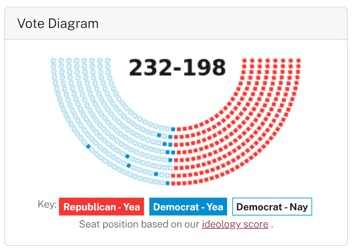
Passed the House 232–198, with only 13 Democrats joining Republicans in support
Congress Stock Trading Ban Exemptions — What’s Still Allowed
This is where a lot of the online confusion comes from. Under H.R. 7008, members can:
Keep stock they already owned before the restriction takes effect
Continue holding or trading certain widely diversified investment funds, including qualifying mutual funds and index funds
Hold certain investments that fall outside the bill’s definition of a covered investment
The bill applies to members of Congress, their spouses, and dependent children. It does not cover the president or vice president, who are subject to separate ethics and financial disclosure rules. Some coverage describes this as a presidential exemption; the bill reaches that result by limiting its definition of “covered individual” to members of Congress and their immediate families.
How the Congress Stock Trading Ban House Vote Played Out
The vote broke down almost entirely along party lines, but not without friction inside the GOP conference itself. Some Republicans argued the bill didn’t go far enough — pushing instead for a full prohibition on stock ownership, not just new purchases. Others defended it as a meaningful first step. The bill’s fate was also complicated by its pairing with an unrelated voter ID provision, a combination critics on both sides have flagged as a factor that could hurt its chances in the Senate.
Where the Congressional Stock Trading Ban Stands in the Senate
This is the part worth watching closely, because there isn’t just one bill in play — there are two, moving on separate tracks. Anyone tracking the congress stock trading ban senate outlook needs to watch both.
The Competing Senate Bills
Sen. Jon Ossoff’s bipartisan bill recently cleared the Senate Homeland Security and Governmental Affairs Committee — the first time a congressional stock trading ban has passed a Senate committee at all (committee announcement).
Sen. Josh Hawley’s bill, a stricter version that would require full divestment, advanced out of committee back in July 2025 but hasn’t been scheduled for a floor vote since.
The House-passed Stop Insider Trading Act faces its own uphill climb, needing 60 votes to clear a Senate filibuster — a bar that’s tripped up nearly every past attempt at this kind of reform
With roughly 10 weeks of Senate session left before the 2026 midterms, the calendar itself may end up being as big an obstacle as the politics
How This Fits Into Existing Stock Act Disclosure Rules
None of this happens in a vacuum. The reason any of these trades are visible to the public in the first place is the STOCK Act, passed in 2012, which established the current framework for stock act disclosure — requiring members to report trades within a set window after the fact.
The proposals moving through Congress right now would layer new restrictions on top of that existing disclosure system, rather than replace it. Even under the House bill, disclosure remains central: the 7-to-14-day advance notice requirement for sales is, in effect, an extension of the same transparency principle the STOCK Act introduced. Broader debates over congressional insider trading law — including whether current penalties are strong enough to change behavior — are likely to keep shaping how these bills evolve if any of them reach a floor vote.
For more on how that disclosure data gets used once it’s public, see our related posts on How Congressional Stock Trading Works
What Happens Next
Nothing here is settled. The Senate calendar, the competing bills, and the unresolved voter ID pairing all mean the outcome of the congressional stock trading ban debate could look very different by the end of the year. Whether the version that ultimately passes — if one does — resembles the House’s narrower restriction, Ossoff’s compromise, or Hawley’s stricter approach remains an open question.
What isn’t in question is that disclosure, in some form, isn’t going away. Whatever changes on the trading side, the public reporting requirements that make this whole conversation possible are staying in place — and likely getting stronger, not weaker.
Follow the Disclosures, However the Bill Shakes Out
Whatever happens in the Senate, one thing isn’t changing: as long as members of Congress are required to disclose their trades, that data is public — and it’s exactly the kind of structured, rules-based signal a systematic strategy is built to act on.
Disclosure: Congress Buys is subject to market risk and may lose value, and it isn’t appropriate for every investor. Because the STOCK Act gives members of Congress up to 45 days to disclose a trade, the strategy is always working with a lag and can’t track any member’s portfolio in real time. A member’s public office doesn’t inherently mean their trades outperform the market. Congress Buys invests in fractional shares where available, or the nearest lower whole share when not, which may be zero for a small enough investment, so an investor’s actual returns may differ from the strategy’s advertised returns. Congress Buys carries a $30 per month subscription paid directly to Quiver Quantitative, in addition to Quantbase’s applicable platform and advisory fees.
Congress Buys is designed around that disclosure mechanism directly:
Tracks filings as they’re published — no manually checking congress.gov or the House Clerk’s database
Rebalances automatically as new disclosures come in, keeping your portfolio aligned with current activity
Built for the data as it exists today — a systematic response to what’s actually disclosed, not a bet on how any pending legislation turns out
Handles execution and tax management, so following the disclosure trail doesn’t turn into a part-time job
Rules-based by design — the same disclosure mechanics driving this article are the ones driving the strategy’s logic
Even if new restrictions on future purchases eventually take effect, the underlying disclosure infrastructure — the STOCK Act reporting requirement this entire piece is about — isn’t going anywhere. As long as the STOCK Act’s disclosure requirement stays in place, Congress Buys is built to keep working with that data, automatically, regardless of which purchase-side restrictions, if any, make it through the Senate.
Quiver Quantitative receives a percentage of advisory fees collected on assets invested in its strategy on the Quantbase platform. This is a conflict of interest because it gives Quiver Quantitative an incentive to recommend Quantbase whether or not it is right for you. Quiver Quantitative is a client of Quantbase.
Frequently Asked Questions
Has the congressional stock trading ban passed?
The House passed the Stop Insider Trading Act on July 22, 2026, but it still needs Senate approval before becoming law.
What does the Stop Insider Trading Act actually ban?
It bars members of Congress and their families from buying new stock, but they can keep existing holdings and still trade widely-held funds.
Is the president exempt from the congressional stock trading ban?
No — H.R. 7008 does not cover the president or vice president. Its restrictions apply to members of Congress, their spouses, and dependent children.
Will the congress stock trading ban senate vote pass?
It’s uncertain. The bill needs 60 votes to clear a filibuster, and its pairing with a voter ID provision complicates its prospects.
How is this different from existing stock act disclosure rules?
The STOCK Act already requires trade disclosure after the fact; the new bills would add restrictions on purchases themselves, on top of that existing system.
Quantbase, LLC is an investment adviser registered with the SEC. Registration does not imply any special degree of skill or training, or any approval by a regulatory authority of an adviser’s investment methods. This material is for informational and educational purposes only. It is not investment advice, a recommendation, or an offer to buy or sell any security, and it does not consider your objectives or circumstances. Investing involves risk, including possible loss of principal. Past performance does not guarantee future results, and no strategy is guaranteed to meet its objective. Advisory services are provided only under a written advisory agreement. Review Quantbase’s Form ADV Part 2A and Form CRS at https://getquantbase.com/disclosures before investing.

Other blogs

