How Congressional Stock Trading Works
5 minutes

Every few months, a headline resurfaces: a member of Congress bought shares of a company right before its stock jumped, or sold right before a downturn. The reaction is usually the same — is this even legal? And if it is, how would someone actually see it happening in time to matter?
This content is educational and general. It is not investment, legal, or tax advice, is not a recommendation to buy or sell any security, and does not consider your individual circumstances. Any securities or strategies mentioned are illustrative only. Consult a qualified professional about your situation.
What Is Congressional Stock Trading?
Congressional stock trading refers to the buying and selling of individual stocks, bonds, and other securities by sitting members of the U.S. House and Senate. It’s a broader and more regulated activity than most people assume. Lawmakers aren’t barred from owning or trading stocks — but they are legally required to disclose those trades publicly, which is the part that makes congressional stock trading fundamentally different from ordinary retail investing: almost everything about it is a matter of public record.
That transparency is also what makes it possible to build a strategy around watching it.
Is Congressional Stock Trading Legal?
Yes. Members of Congress are permitted to trade individual securities, and there’s no blanket rule preventing it. What changed the landscape wasn’t a ban — it was a disclosure requirement. Reform
The STOCK Act and Disclosure Rules
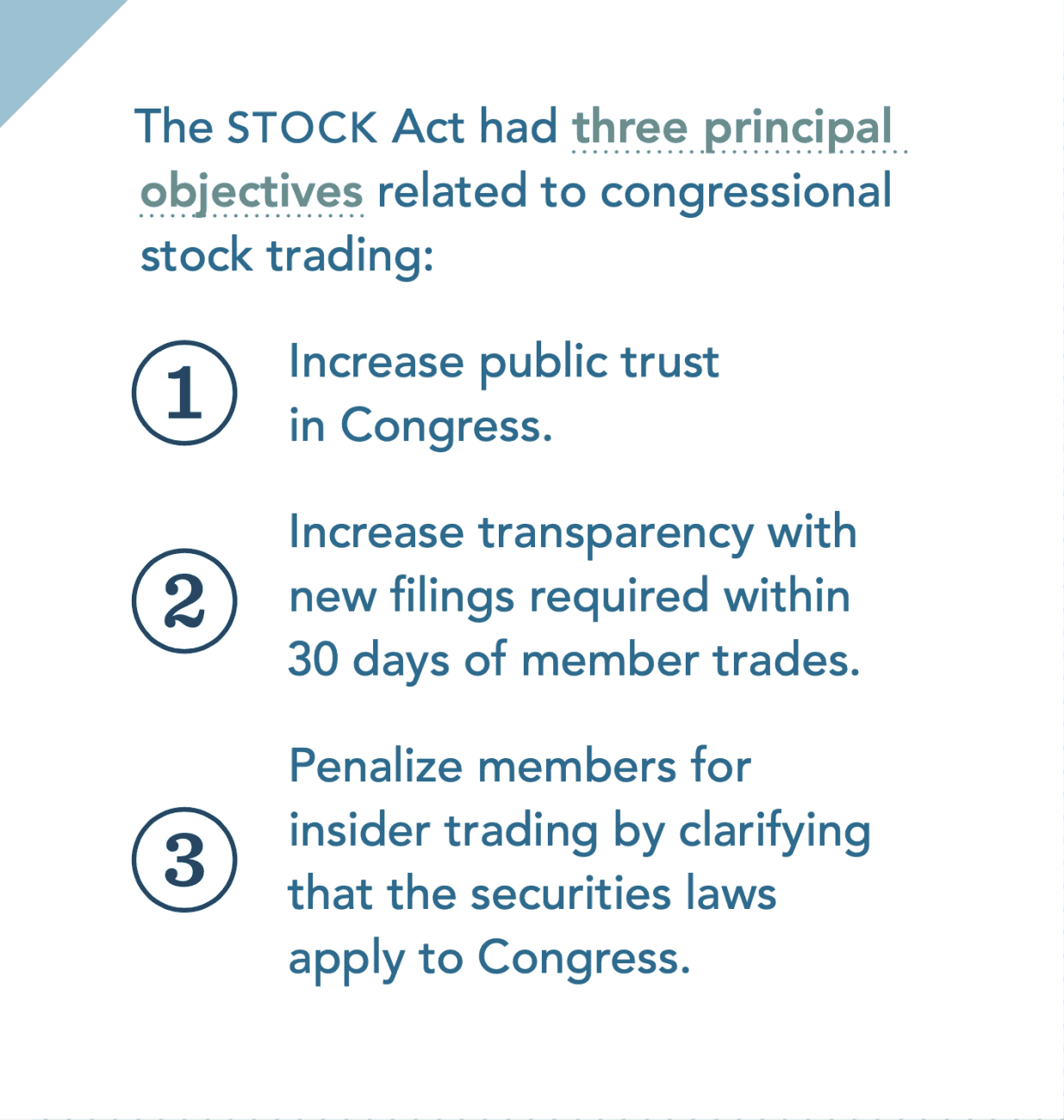
The Stop Trading on Congressional Knowledge (STOCK) Act, passed in 2012, is the law that governs this. The STOCK Act disclosure rules require members of Congress — along with their spouses and dependent children — to publicly report any securities transaction over $1,000 within a defined window after the trade occurs. The law also explicitly confirmed that members of Congress are not exempt from federal insider trading law, closing a loophole many assumed existed before its passage.
The Congress Stock Trading Disclosure Lag
Here’s the part that trips people up: disclosure isn’t instant. Under the congress stock trading disclosure lag, lawmakers have up to 45 days to report a transaction after it happens. That means by the time a trade becomes public, the trade itself may be well over a month old.
This lag doesn’t make the information useless — it just changes how you’d need to use it. Reacting to a single trade the day it’s disclosed means reacting to decisions made weeks earlier. A more realistic approach treats these disclosures as a pattern to follow over time, not a same-day signal to chase.
What Data Is Actually Public
Every disclosed trade becomes part of the public record and typically includes the security traded, the type of transaction (buy or sell), and an estimated dollar range for the trade — disclosures use ranges rather than exact amounts, which is one of the more commonly misunderstood congress stock disclosure requirements. Filings are submitted through official House and Senate financial disclosure systems and are, in principle, available to anyone willing to look for them.

In practice, "available" and "usable" are two different things. The filings aren’t organized like a stock screener. They’re PDFs and forms, filed continuously, by hundreds of individuals, with no built-in way to sort by sector, position size, or trading pattern.
How to Track Congress Stock Trades
If you’re wondering how to track congress stock trades yourself, the starting point is the official disclosure databases maintained by the House Clerk and Senate Ethics offices. From there, you’re on your own to monitor new filings, read each one, and decide what — if anything — it tells you.
Manual Tracking vs. Automated Tracking
Manually watching disclosures works for one person of interest, for a while. It becomes unmanageable fast once you’re trying to follow more than a handful of lawmakers, across hundreds of filings a year, while also accounting for the 45-day lag and the imprecision of disclosed dollar ranges. This is really a question of congress trading transparency in theory versus in practice — the data is public, but public doesn’t mean easy to act on. Most people who start tracking manually stop within a few filings.
Automated tracking closes that gap. Instead of checking filing systems by hand, a systematic congress stock trade tracker pulls new disclosures as they’re published, applies consistent rules for position sizing and timing, and rebalances a portfolio accordingly — without requiring anyone to read a single PDF.
Put Congressional Trade Tracking on Autopilot
If you find the mechanics of congressional stock trading more interesting than the idea of monitoring filings yourself, that’s exactly the gap Quiver Quantitative’s Congress Buys strategy is built to close. The strategy is built on Quiver’s congressional trading data and is available for automated investing through Quantbase.
Here’s what it handles for you:
Rules-based portfolio construction — built directly from disclosed congressional purchase activity, not guesswork
Automated rebalancing — your portfolio updates as new trades are reported
Rather than trying to read every filing and calculate your own weighted exposure, Congress Buys turns the public disclosure process this article just walked through into something that runs on its own.
Congress Buys is subject to market risk and may lose value, and it isn’t appropriate for every investor. Because the STOCK Act gives members of Congress up to 45 days to disclose a trade, the strategy is always working with a lag and can’t track any member’s portfolio in real time. A member’s public office doesn’t inherently mean their trades outperform the market. Congress Buys invests in fractional shares where available, or the nearest lower whole share when not, which may be zero for a small enough investment, so an investor’s actual returns may differ from the strategy’s advertised returns. Congress Buys carries a $30 per month subscription paid directly to Quiver Quantitative, in addition to Quantbase’s applicable platform and advisory fees.
Quantbase, LLC is an investment adviser registered with the SEC. Registration does not imply any special degree of skill or training, or any approval by a regulatory authority of an adviser’s investment methods. This is for informational purposes only and is not investment advice or an offer to buy or sell any security. Investing involves risk, including possible loss of principal. Past performance does not guarantee future results.
Quiver Quantitative receives a percentage of advisory fees collected on assets invested in its strategy on the Quantbase platform. This is a conflict of interest because it gives Quiver Quantitative an incentive to recommend Quantbase whether or not it is right for you. Quiver Quantitative is a client of Quantbase.
Frequently Asked Questions
Is congressional stock trading legal?
Yes. Members of Congress can legally trade individual stocks. The STOCK Act requires them to publicly disclose transactions rather than banning trading outright.
How does congressional stock trading disclosure work?
Under STOCK Act disclosure rules, lawmakers must report trades over $1,000 within 45 days, including the security, transaction type, and an estimated dollar range.
What is the congress stock trading disclosure lag?
It’s the gap between when a trade happens and when it’s legally reported — up to 45 days — meaning disclosed trades are already somewhat dated by the time they’re public.
How can I track congress stock trades?
You can check official House and Senate disclosure filings manually, or use an automated congress stock trade tracker like Congress Buys to monitor and rebalance for you.
Why is congressional stock trading transparency important?
Public disclosure is the main safeguard against undisclosed insider trading by lawmakers, giving investors and watchdogs visibility into potential conflicts of interest.
Quantbase, LLC is an investment adviser registered with the SEC. Registration does not imply any special degree of skill or training, or any approval by a regulatory authority of an adviser’s investment methods. This material is for informational and educational purposes only. It is not investment advice, a recommendation, or an offer to buy or sell any security, and it does not consider your objectives or circumstances. Investing involves risk, including possible loss of principal. Past performance does not guarantee future results, and no strategy is guaranteed to meet its objective. Advisory services are provided only under a written advisory agreement. Review Quantbase’s Form ADV Part 2A and Form CRS at https://getquantbase.com/disclosures before investing.

Other blogs

