Is Congressional Stock Trading Actually Insider Trading?
5 minutes
Is Congressional Stock Trading Actually Insider Trading?
Every time a member of Congress discloses a stock trade shortly before a favorable committee vote, the same question resurfaces online: isn’t this just insider trading with better PR? The frustration is understandable, but the legal answer is more specific than the outrage suggests. Understanding how congressional insider trading works requires separating two things that get conflated constantly — what the law actually defines as insider trading, and what the STOCK Act requires lawmakers to disclose.
This content is educational and general. It is not investment, legal, or tax advice, is not a recommendation to buy or sell any security, and does not consider your individual circumstances. Any securities or strategies mentioned are illustrative only. Consult a qualified professional about your situation.
What Counts as Insider Trading, And Why Congress Is Different
Insider trading, as prosecuted under U.S. securities law, generally requires a breach of fiduciary duty — typically an obligation a company insider owes to shareholders, or that flows down a chain from someone who does. That’s the legal hook prosecutors use.
Members of Congress are not corporate officers, directors, or employees of the companies whose stock they trade, so the traditional insider trading case built on a duty to shareholders does not fit neatly. Section 4 of the STOCK Act addressed that issue directly. It states that members and employees of Congress are not exempt from insider trading prohibitions under Section 10(b) and Rule 10b-5, and establishes that they owe a duty arising from a relationship of trust and confidence with respect to material nonpublic information obtained through their positions or official responsibilities. The relative rarity of congressional insider trading prosecutions therefore reflects the difficulty of establishing the required facts in a particular case, rather than lawmakers being outside the reach of insider trading law.
The STOCK Act: What It Actually Requires
The Stop Trading on Congressional Knowledge (STOCK) Act, passed in 2012, was Congress’s response to public pressure after reporting suggested lawmakers might be trading on non-public information gained through their roles. Rather than banning the practice, it created STOCK Act disclosure requirements: members must publicly report stock transactions above a set threshold within a defined window.
Disclosure Windows and Enforcement Gaps
In practice, that window has stretched to as long as 45 days between a trade and its public filing — long enough that critics argue it blunts real-time accountability. Enforcement has also been inconsistent; late filings are common and penalties for missing the deadline are often minimal. The law created transparency, not a ban, and that distinction is where most of the public confusion about congressional insider trading originates.
So Is Congressional Stock Trading Legal?
Under current law, yes — with disclosure obligations attached. There’s no general prohibition on members of Congress owning or trading individual stocks, and the fiduciary-duty gap means traditional insider trading statutes rarely reach their trades directly, even when timing looks suspicious relative to legislative activity. That said, "legal" isn’t the same as "uncontroversial" — which is exactly why the ban debate has real momentum right now.
The Push to Ban Congressional Stock Trading
Calls for a congressional stock trading ban aren’t new, but 2025 and 2026 brought the most concrete legislative movement in years, with several competing proposals reflecting real disagreement over how far a ban should go.
A bipartisan group introduced the Restore Trust in Congress Act in September 2025, drawing more than 140 co-sponsors from both parties. Separately, Senator Josh Hawley’s HONEST Act — which would require members, the president, and vice president to divest existing individual stock holdings, not just stop new purchases — advanced out of a Senate committee in July 2025 with Democratic support, but stalled there without a floor vote scheduled.
The Stop Insider Trading Act — What Passed the House
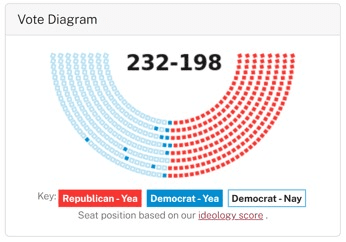
The most recent development came on July 22, 2026, when the House passed the Stop Insider Trading Act, 232–198, with 13 Democrats joining most Republicans. The bill bars members, spouses, and dependent children from buying new individual stocks, while allowing them to retain and eventually sell existing holdings under a public notice requirement. Supporters framed it as removing the appearance of impropriety; critics on both sides called it incomplete — some Democrats argued it doesn’t go far enough since it permits continued ownership, while advocates of a full ban like Hawley described it as better than nothing rather than the fix they’d prefer.
Why the Senate Fight Looks Different
The House bill’s path forward is uncertain. It was paired with an unrelated voter-ID measure, which several Democrats say was a deliberate move to limit bipartisan Senate support, and Senate Republican leadership hasn’t signaled interest in scheduling a vote. Meanwhile, the more sweeping Restore Trust in Congress Act and HONEST Act remain stalled, illustrating a persistent pattern: bipartisan appetite for some restriction exists, but consensus on how strict a ban should be has repeatedly broken down.
What This Means for Investors Watching the Space
Whatever the fiduciary-duty technicalities, the disclosures required under the STOCK Act remain public record today — and that’s unlikely to change even if a ban eventually passes, since disclosure and prohibition are separate mechanisms. For investors following this space, that means the underlying data — who’s trading what, and when — stays available regardless of how the legislative fight over congressional insider trading and stock ownership plays out.
Congress Buys: A Systematic Way to Track the Data While the Debate Plays Out
Whatever happens with the Stop Insider Trading Act, the HONEST Act, or the Restore Trust in Congress Act, one thing isn’t changing anytime soon: STOCK Act disclosures remain public record. That data exists whether or not a ban ever passes — and Congress Buys is built to track it systematically, without you needing to monitor bill status or filing deadlines yourself.
Congress Buys is subject to market risk and may lose value, and it isn’t appropriate for every investor. Because the STOCK Act gives members of Congress up to 45 days to disclose a trade, the strategy is always working with a lag and can’t track any member’s portfolio in real time. A member’s public office doesn’t inherently mean their trades outperform the market. Congress Buys invests in fractional shares where available, or the nearest lower whole share when not, which may be zero for a small enough investment, so an investor’s actual returns may differ from the strategy’s advertised returns. Congress Buys carries a $30 per month subscription paid directly to Quiver Quantitative, in addition to Quantbase’s applicable platform and advisory fees.
What Congress Buys actually does:
Tracks disclosures as they’re filed — pulls directly from congressional stock disclosure filings, so you’re not manually refreshing government databases
Automated rebalancing — portfolio updates as new purchase disclosures are reported, keeping allocations current without hands-on management
Removes position-sizing guesswork — disclosure ranges get translated into a structured allocation, rather than you estimating from vague dollar bands
Built for systematic exposure, not headline-chasing — this is a rules-based approach to disclosure data, not a bet on any individual bill or lawmaker
The legislative fight over whether this kind of trading should be restricted is exactly why disclosure data matters right now — it’s the mechanism giving the public visibility into these trades at all. Congress Buys is built around that same disclosure infrastructure, applying it systematically rather than case-by-case.
Quantbase, LLC is an investment adviser registered with the SEC. Registration does not imply any special degree of skill or training, or any approval by a regulatory authority of an adviser’s investment methods. This is for informational purposes only and is not investment advice or an offer to buy or sell any security. Investing involves risk, including possible loss of principal. Past performance does not guarantee future results.
Quiver Quantitative receives a percentage of advisory fees collected on assets invested in its strategy on the Quantbase platform. This is a conflict of interest because it gives Quiver Quantitative an incentive to recommend Quantbase whether or not it is right for you. Quiver Quantitative is a client of Quantbase.
Frequently Asked Questions
Is congressional stock trading considered insider trading?
It can be. The STOCK Act states that members of Congress are not exempt from federal insider trading prohibitions and that they owe a duty of trust and confidence with respect to material nonpublic information obtained through their positions. In practice, a case still depends on proving the facts required for an insider trading violation, including what information a member possessed and how it was used.
What does the STOCK Act require members of Congress to do?
The STOCK Act disclosure requirements mandate that members publicly report stock transactions above a set threshold within a defined window, typically up to 45 days.
Is congressional stock trading legal right now?
Yes — lawmakers can legally buy and sell individual stocks as long as they meet STOCK Act disclosure deadlines, though several 2025–2026 bills aim to change that.
What is the Stop Insider Trading Act?
It’s a House-passed bill (232–198, July 22, 2026) that would bar members, spouses, and dependent children from buying new individual stocks while letting them keep existing holdings.
Will Congress actually ban stock trading?
It’s unresolved. Multiple proposals — the Stop Insider Trading Act, the HONEST Act, and the Restore Trust in Congress Act — have stalled or face an uncertain path in the Senate.

Other blogs

