AI Stock Analysis: A Guide to Evaluating Companies

AI Stock Analysis: A Guide to Evaluating Companies
Artificial intelligence has become the biggest story in the stock market — and one of the most expensive. Global AI-related investment is forecast to reach about $1 trillion in 2026, with roughly $581 billion of that in the US, a level of investment that has no real precedent outside a handful of historical technology buildouts. For investors, that raises an obvious question: how do you actually tell which companies are building something durable, and which are just riding the hype cycle? That's where a disciplined approach to AI stock analysis comes in.
This guide isn't about picking winners. It's a framework — a repeatable process you can apply to any AI-exposed company to separate substance from noise.
This content is educational and general. It is not investment, legal, or tax advice, is not a recommendation to buy or sell any security, and does not consider your individual circumstances. Any securities or strategies mentioned are illustrative only. Consult a qualified professional about your situation. Views are as of August 2026, based on information believed reliable but not guaranteed, and subject to change without notice. Forward-looking statements involve risks and uncertainties, and actual outcomes may differ materially. Quantbase has no obligation to update this content. This is not a forecast for any Quantbase strategy and is not investment advice.
What Makes AI Stock Analysis Different Right Now
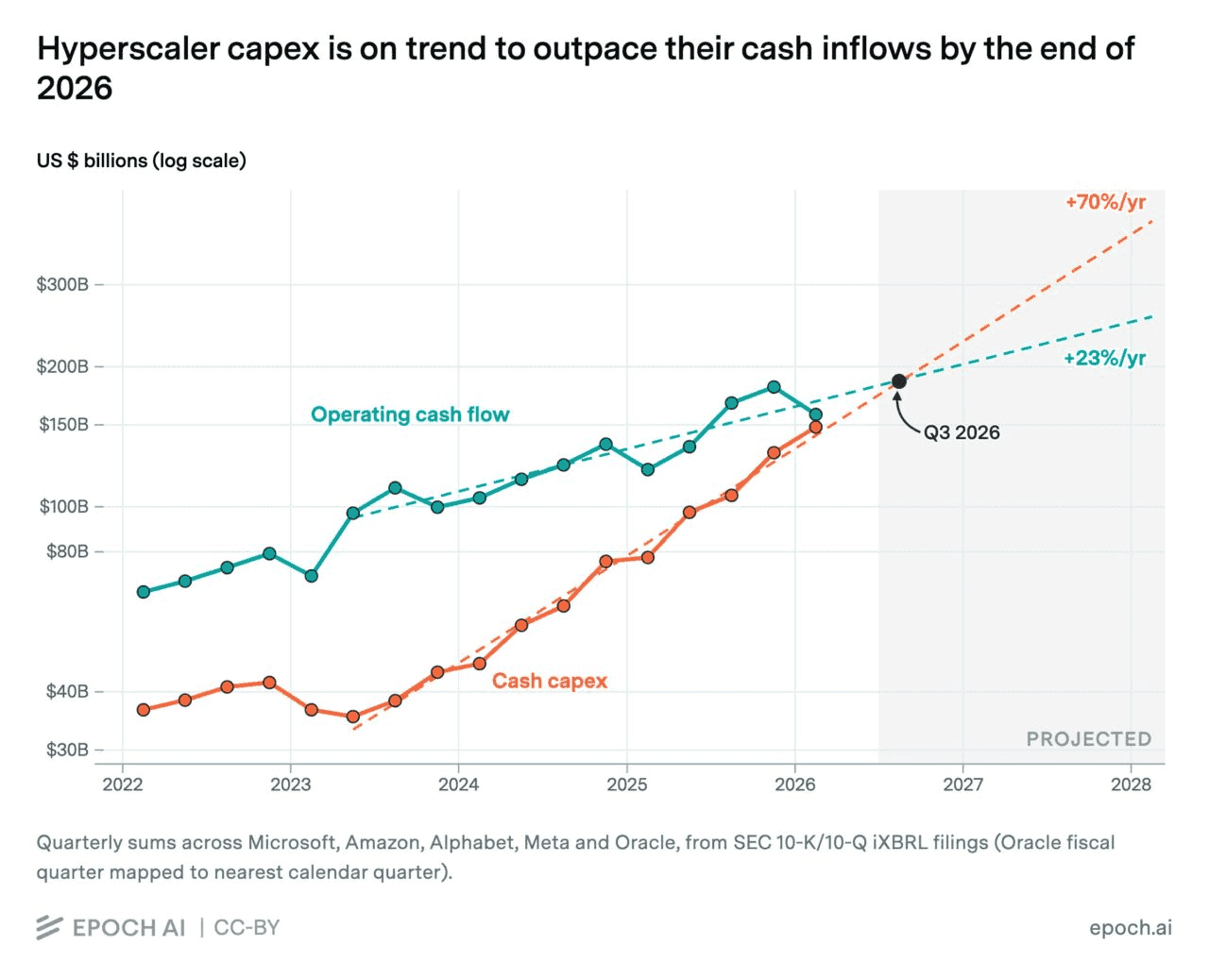
Traditional stock analysis leans heavily on historical earnings and steady-state margins. AI companies complicate that picture. Many of the largest players are spending a historically unusual share of their cloud revenue on infrastructure — deliberately investing years ahead of confirmed demand. That means near-term free cash flow can look weak even at healthy, well-run companies, while a smaller company with lighter capex needs might look "cheaper" on paper without actually being lower-risk.
Good AI stock analysis has to account for this. The goal isn't to reward or punish spending on its face — it's to understand what that spending is buying, how it's financed, and whether there's a credible path from infrastructure to revenue.

How to Evaluate AI Stocks: A Step-by-Step Framework
Knowing how to evaluate AI stocks starts with separating three different questions that often get blurred together: Is the company spending on AI? Is that spending generating revenue? And is the revenue actually profitable once financing costs are included? A company can score well on the first question and poorly on the other two.
Start With AI Stock Fundamentals
Before anything else, look at the basics of AI stock fundamentals: revenue growth, gross margin trends, and how much of the business is actually AI-driven versus legacy operations getting an "AI" label in investor materials. Cloud backlog — contracted future revenue not yet recognized — is a particularly useful figure for AI-exposed companies, since it shows demand that's already been committed rather than projected.
Dig Into AI Company Financials
This is where AI company financials separate disciplined operators from speculative ones. Key things to check:
Capex as a percentage of revenue. Some hyperscalers are now spending an amount comparable to their entire cloud revenue on capital expenditures. That is not automatically bad, but it means near-term earnings will look thin regardless of the underlying business quality.
How the spending is financed. Capex funded from existing cash flow is a very different risk profile than capex funded through new debt issuance.
Depreciation schedules. AI hardware (especially GPUs) tends to depreciate faster than traditional data center equipment, which affects how expensive the buildout really is over time.
Watch for These AI Stock Red Flags
Certain patterns are worth extra scrutiny. Common AI stock red flags include: revenue growth that consistently trails capex growth by a wide margin, vague or shifting definitions of what counts as "AI revenue," heavy reliance on related-party or vendor-financing deals to book revenue, and management commentary that emphasizes narrative ("supercycle," "arms race") over concrete unit economics. None of these are automatic disqualifiers on their own — but a company showing several at once deserves a harder look before you draw conclusions.
FAQ
What is AI stock analysis?
AI stock analysis is the process of evaluating AI-exposed companies using fundamentals, financials, and risk indicators — rather than hype or headlines. It focuses on verifiable data like revenue growth, capex spending, and cloud backlog.
How do you evaluate AI stocks without picking individual winners?
Knowing how to evaluate AI stocks means applying the same criteria — fundamentals, financials, red flags — consistently across companies, rather than betting on one name. A quant approach to stock picking does this systematically through rules-based rebalancing.
What are the biggest AI stock red flags to watch for?
Common AI stock red flags include revenue growth that lags far behind capex growth, vague definitions of "AI revenue," and heavy reliance on debt-financed infrastructure spending.
Why do AI company financials look different from other tech companies right now?
AI company financials often show weaker near-term free cash flow because hyperscalers are spending unusually large shares of revenue on infrastructure ahead of confirmed demand, which can distort typical valuation comparisons.
Is a quant approach better than manual AI stock analysis?
Neither is inherently "better" — a quant approach to stock picking automates the same fundamentals-based evaluation that manual AI stock analysis requires, applying it continuously rather than periodically.
Quantbase, LLC is an investment adviser registered with the SEC. Registration does not imply any special degree of skill or training, or any approval by a regulatory authority of an adviser's investment methods. This material is for informational and educational purposes only. It is not investment advice, a recommendation, or an offer to buy or sell any security, and it does not consider your objectives or circumstances. Investing involves risk, including possible loss of principal. Past performance does not guarantee future results, and no strategy is guaranteed to meet its objective. Advisory services are provided only under a written advisory agreement. Review Quantbase's Form ADV Part 2A and Form CRS at https://getquantbase.com/disclosures before investing.

Other blogs

