Backtesting Pitfalls That Ruin Trading Strategies

A backtest can make almost any trading idea look brilliant. Run enough variations against enough historical data, and something will eventually produce an impressive-looking equity curve. The problem is that a great-looking backtest and a real, durable trading edge are two different things — and the gap between them is where most systematic strategies quietly fall apart. Understanding the most common backtesting pitfalls is less about learning a checklist and more about learning to distrust results that came from the data instead of from a clear, testable idea about why the market would behave that way.
What Makes a Backtest Misleading in the First Place
The core issue behind most backtesting pitfalls is sequence. A hypothesis should come from an observation about market structure or behavior — something like “a specific type of forced selling tends to overshoot, and prices tend to partially recover afterward.” That's a mechanism: it names who's doing what, and why. A backtest is supposed to test whether that mechanism shows up in the data.
The trouble starts when the order flips — when someone runs thousands of rule combinations against historical prices and picks whichever one happened to perform best. At that point, the backtest isn't testing an idea anymore. It's just finding a pattern in noise and calling it a strategy after the fact.
Overfitting — When a Rule Is Tuned to Noise, Not a Real Pattern
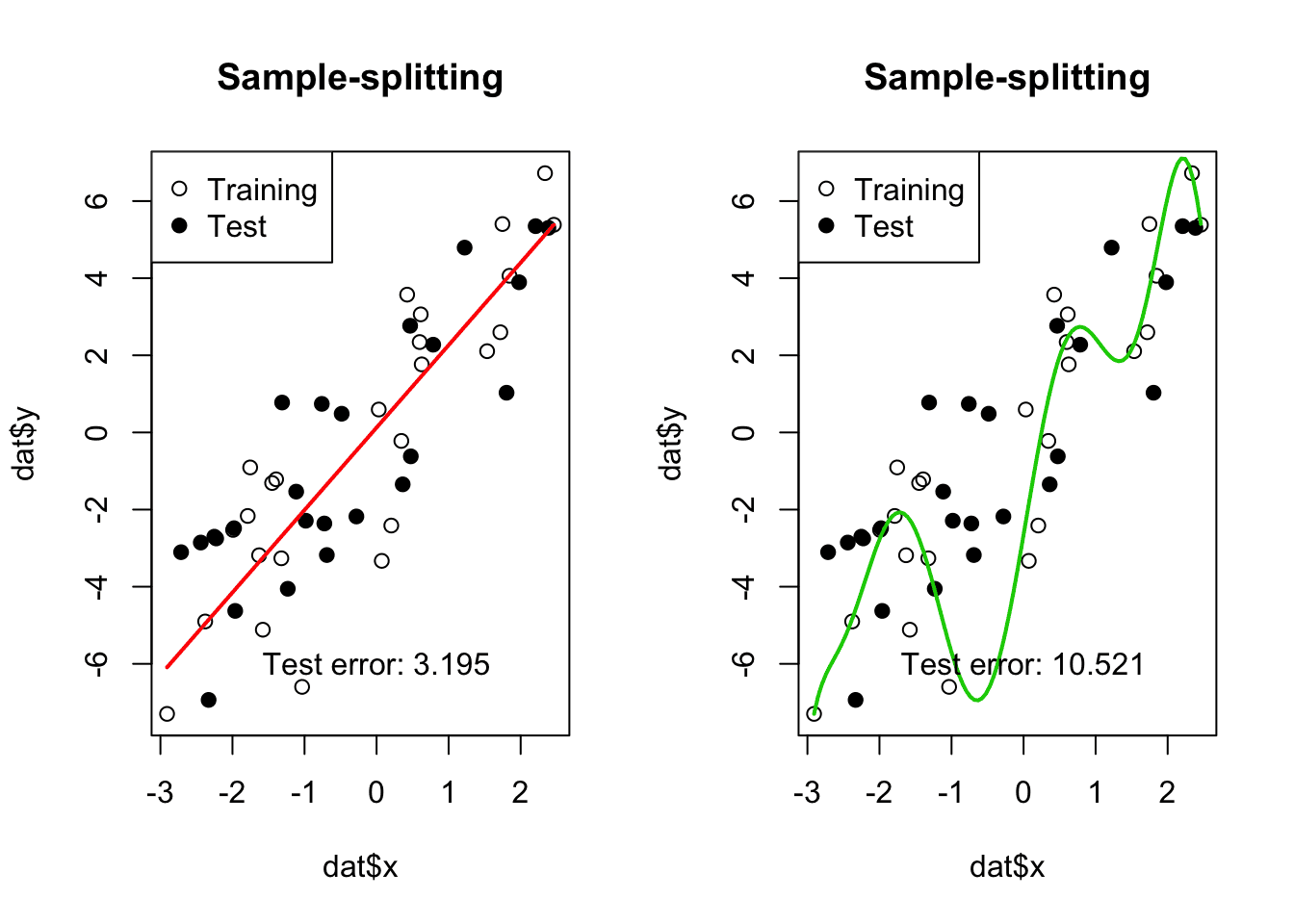
Overfitting is the most well-known of the backtesting pitfalls, and it happens whenever a rule is adjusted until it fits the exact historical window it was tested on — a specific lookback period, a precise threshold, an exact combination of conditions that happened to work for those particular dates. The rule ends up memorizing the noise in that one dataset rather than capturing something that would hold up going forward.
A simple gut check: if a strategy's story only makes sense once you've picked the exact parameters, and falls apart when you round those numbers to something simpler, that's usually a sign of overfitting rather than a real signal.
Survivorship Bias — Only Looking at What Worked
Survivorship bias creeps in when a backtest only includes assets, companies, or funds that still exist today — leaving out everything that was delisted, went bankrupt, or otherwise disappeared along the way. Because the failures are missing from the dataset, results look better than what an investor living through that period would actually have experienced. This bias is easy to miss because it doesn't come from a coding error — it comes from the dataset itself being incomplete in a way that flatters the outcome.
Look-Ahead Bias — Using Information You Wouldn't Have Had Yet
Look-ahead bias happens when a backtest accidentally uses information that wasn't actually available at the time a trade would have been made — a revised economic figure, a restated earnings number, or even a stock's known future price. Because the test can “see the future” in small ways, it produces results no real-time trader could have achieved. It's often the hardest of these backtesting pitfalls to catch, since the error can be buried in how a dataset is time-stamped rather than in the trading logic itself.
In-Sample vs Out-of-Sample: Why Testing Order Matters
One of the simplest safeguards against these problems is separating data into two distinct groups: the in-sample period, used to build and tune a rule, and the out-of-sample period, which the rule has never seen and is only used to check whether the idea still holds up. The in-sample vs out-of-sample distinction matters because a rule that was shaped by a specific dataset will almost always look good on that same dataset — that's not evidence of an edge, it's just circular. The real test is whether performance holds on data the rule had no opportunity to be tuned against.
How to Guard Against These Pitfalls
None of these issues require exotic tools to catch — they mostly require discipline about when certain data gets used and how a result is checked before it's trusted. A few practical habits:
State the mechanism behind an idea in one plain sentence before ever touching a backtest
Set aside a portion of the data as out-of-sample from the start, and don't peek at it early
Ask what a strategy with random entries, at the same trade frequency, would have produced — a shocking number of “edges” turn out to be mostly exposure and trade count
Check whether a rule survives being split across different time periods and market regimes, rather than looking strong only in one stretch
Walk-Forward Testing as a Safeguard
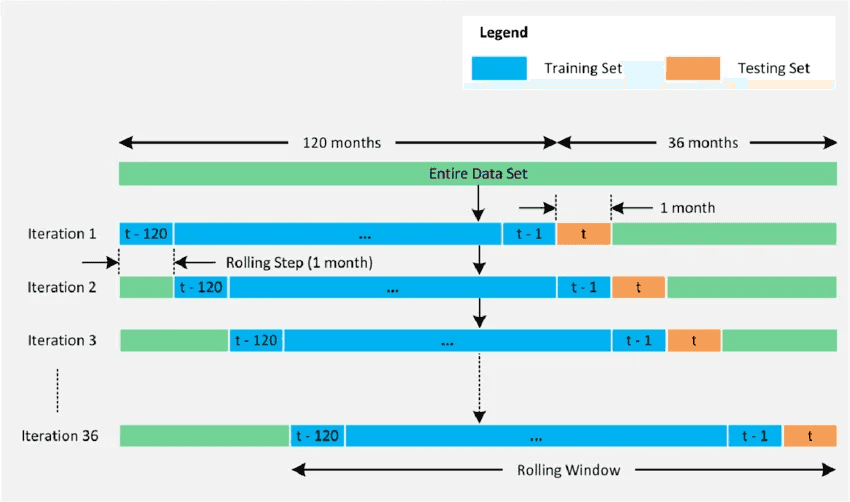
Walk-forward testing extends the in-sample vs out-of-sample idea into an ongoing process: a rule is built on one window of data, tested on the next window it hasn't seen, then the whole window shifts forward and the process repeats. Because the rule has to keep proving itself on new, unseen data rather than being validated just once, walk-forward testing makes it much harder for an overfit rule to slip through unnoticed.
Backtesting pitfalls aren't really about bad math — they're about mistaking a well-fit story for a real one. A mechanism that can be stated simply, tested honestly on data it hasn't seen, and checked across different conditions is a much sturdier foundation than any single impressive-looking chart.
Frequently Asked Questions
What is a backtesting pitfall?
A backtesting pitfall is a flaw in how historical data is used to test a strategy — such as overfitting, survivorship bias, or look-ahead bias — that makes results look better than what a trader would have actually experienced in real time.
How do you avoid overfitting in a backtest?
Test the strategy on out-of-sample data it wasn't built on, keep the rule's logic simple enough to explain in one sentence, and check whether it holds up across different time periods and market conditions.
What is the difference between in-sample and out-of-sample testing?
In-sample data is used to build and tune a strategy, while out-of-sample data is set aside and only used afterward to check whether the strategy still works on data it has never seen.
Why does survivorship bias make backtests look better than reality?
Survivorship bias occurs when a backtest only includes assets that still exist today, leaving out the ones that failed or were delisted — which removes the bad outcomes an investor would actually have lived through.
Is walk-forward testing better than a single backtest?
Walk-forward testing repeatedly rebuilds and re-tests a strategy on new, unseen data over time, which makes it harder for an overfit rule to pass unnoticed compared to a single one-time backtest.
*This content is educational and general. It is not investment, legal, or tax advice, is not a recommendation to buy or sell any security, and does not consider your individual circumstances. Any securities or strategies mentioned are illustrative only. Consult a qualified professional about your situation.*

Other blogs
