How to Validate a Trading Strategy Before You Trade It

Every trading idea feels obvious in hindsight. The pattern lines up, the equity curve slopes upward, and it's tempting to size up and go live. But a backtest that looks clean is not the same thing as an idea that's actually sound. Learning how to validate a trading strategy is less about running the test and more about deciding, before you ever touch historical data, whether the idea deserves a test at all.
This distinction matters because backtesting rewards exactly the kind of thinking that produces false positives. Enough parameters, enough lookback windows, and enough trial and error will eventually produce a curve that looks great — whether or not there's a real reason for it to keep working. That's the real test behind how to validate a trading strategy before committing any real research time to it: not whether the numbers look good, but whether the logic could survive contact with a market that's trying to arbitrage it away.
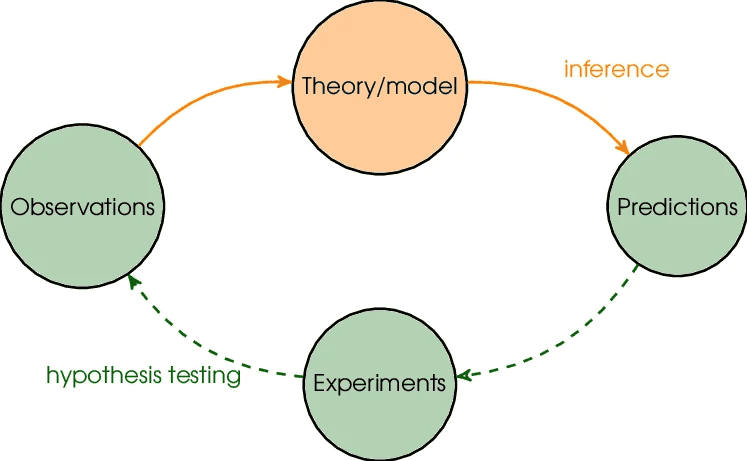
Diagram from the publication "Discovering Causal Relations and Equations from Data" by Gustau Camps-Valls, Andreas Gerhardus, Urmi Ninad, and Jakob Runge, available on ResearchGate under a Creative Commons Attribution 4.0 International (CC BY 4.0) license
Why Most Trading Ideas Never Survive a Backtest
Most trading ideas start the wrong way around. Someone notices that a pattern coincides with favorable outcomes, builds a rule around it, and only afterward asks whether there's a reason the pattern should exist. That order is backwards, and it's the single biggest reason ideas that look strong in testing fall apart once they meet live markets.
A more durable approach starts with a mechanism: a specific, statable reason why a group of market participants would behave in a way that creates an opportunity, and why that behavior wouldn't simply get arbitraged away once enough people noticed it. If an idea can only be defended by pointing at the chart — “look, it happened” — rather than by naming who is on the other side of the trade and why they keep behaving that way, it's a pattern observation, not a hypothesis.
A Backtesting Checklist: Sanity Checks Before You Code Anything
Before opening any backtesting software, a short backtesting checklist can save weeks of wasted effort. None of these checks require historical data — they're about the logic of the idea itself. This is the point where how to validate a trading strategy stops being an abstract question and turns into a specific set of checks you can run before writing any code.
State the Mechanism Before You Trust the Pattern
Write down, in one sentence, who is expected to be on the losing side of this trade and why they don't simply stop. If the honest answer is “because the indicator lined up historically,” the idea isn't ready for testing yet. If the answer names a specific behavior — forced selling, structural information delay, a systematic under-reaction — it's worth carrying forward.
Watch for Overfitting in Backtesting
Overfitting in backtesting happens when a strategy has been shaped by so many adjustable parameters, filters, or lookback periods that it fits the noise in one dataset rather than a real, repeatable effect. A useful early warning sign: does a crude, simplified version of the idea still show something interesting? If only a highly specific combination of settings produces a good result, that specificity is often a symptom of fitting the past rather than describing the future.
Use a Null Hypothesis to Test Your Trading Idea
Before getting attached to a result, it helps to ask what a null hypothesis trading comparison would produce — in other words, what would random entries at the same frequency and holding period have returned? Skipping this comparison is one of the most common ways an idea looks better than it actually is. A surprising amount of apparent edge turns out to be explained by exposure and trade count rather than genuine skill.
In-Sample vs Out-of-Sample Testing: Why the Order Matters
Once an idea has passed the checks above, it's time to look at data — carefully. In-sample vs out-of-sample testing is the discipline of splitting historical data into two parts: one section used to build and refine the idea, and a separate, untouched section reserved only for testing it once the rules are finalized.
The temptation is to peek at the full dataset while still refining the strategy, adjusting rules until the whole history looks good. That approach quietly turns the entire dataset into an in-sample set, leaving nothing left to genuinely test against. This step is central to how to validate a trading strategy responsibly, because it's the difference between a rule that describes the past and one that might describe the future. A strategy that performs meaningfully worse out-of-sample than in-sample is telling you something important: the rules were fit to a specific history, not to a real, repeatable effect.
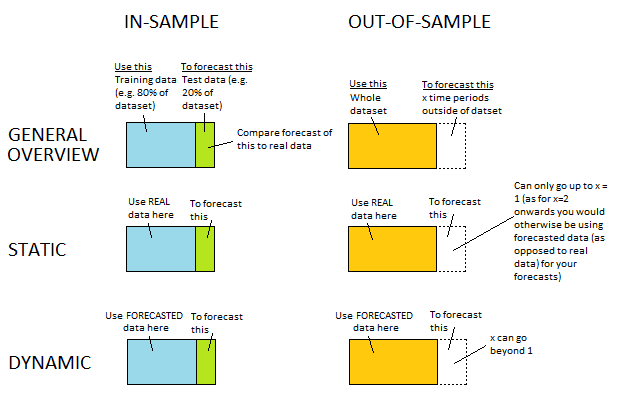
Diagram by Reddit user RustyMuffin444 featured on the ELI5 thread via Imgur.
What Comes After Validation: Walk-Forward Testing
An idea that survives mechanism review, avoids overfitting, and holds up out-of-sample has cleared the basic bar — but markets change over time, and a rule built on one historical period won't necessarily keep working as conditions shift. Walk-forward testing extends the validation process by repeatedly refitting a strategy's rules on a rolling window of data and testing each version on the period immediately after it, rather than relying on one single split.
This step matters because a strategy that only survives review under one static set of market conditions hasn't really been tested against the way real markets evolve. Walk-forward testing is a natural next step once a hypothesis has already earned its place through the checks above — it isn't a substitute for them.
Validating a trading strategy isn't a single step that happens right before going live; it's a sequence of checks, each designed to catch a different way an idea can fool you. Starting with the mechanism, checking for overfitting, comparing against a null baseline, respecting the in-sample and out-of-sample split, and eventually walking the strategy forward through time — together, these are what separate a durable trading idea from one that only ever worked in a spreadsheet.
Frequently Asked Questions
What does it mean to validate a trading strategy?
Validating a trading strategy means checking whether an idea has a real, repeatable reason to work before risking money on it — not just confirming that a backtest looks good.
How do you avoid overfitting in backtesting?
Avoid overfitting in backtesting by limiting adjustable parameters, testing whether a simplified version still works, and confirming results hold on out-of-sample data.
Why is in-sample vs out-of-sample testing important?
In-sample vs out-of-sample testing separates the data used to build a strategy from the data used to test it, so results reflect real performance rather than rules shaped to fit history.
What is a null hypothesis in trading?
A null hypothesis trading comparison checks what random entries at the same frequency would have produced, revealing whether a strategy's apparent edge is real or just exposure.
When should you use walk-forward testing?
Walk-forward testing is used after a strategy has passed initial validation, to confirm the rules still hold up as they're refit and tested across multiple rolling time periods.
*This content is educational and general. It is not investment, legal, or tax advice, is not a recommendation to buy or sell any security, and does not consider your individual circumstances. Any securities or strategies mentioned are illustrative only. Consult a qualified professional about your situation.*

Other blogs