Congressional Stock Trading Tracker: Free vs Automated

What Is a Congressional Stock Trading Tracker?
Under the STOCK Act, members of Congress must publicly disclose most of their stock trades within 45 days of the transaction date. That single legal requirement is the reason an entire category of tools exists in the first place: the congressional stock trading tracker. These platforms pull Periodic Transaction Reports as they’re filed with the Clerk of the House or Secretary of the Senate, organize the disclosures by member, ticker, and date, and turn a pile of scanned government PDFs into something you can actually search and sort.
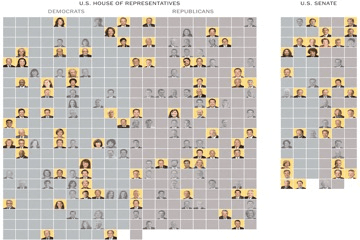
If you’ve landed on this page while searching for a congressional stock trading tracker, you’re probably trying to answer one of two questions: what has Congress been buying lately, and is there a practical way to track congress stock trades without manually checking filings every week. If you’re still fuzzy on the disclosure mechanics behind all of this, how congressional stock trading works is a good place to start — this piece is about the tools people use to watch the trades once they understand the basics.
Disclosure: This content is educational and general. It is not investment, legal, or tax advice, is not a recommendation to buy or sell any security, and does not consider your individual circumstances. Any securities or strategies mentioned are illustrative only. Consult a qualified professional about your situation.
Free Congress Trading Trackers Compared
A handful of tools now compete for the same audience of quant-curious retail investors. They differ less in the underlying data — nearly all of them source the same public disclosures — and more in how that data is presented, and who it’s built for.
Capitol Trades: A Free Congress Trade Tracker Built for Simplicity
Capitol Trades does one thing well: it presents congressional trades in a clean, sortable table with individual member profile pages. There’s no cost and no account required, which makes it a solid starting point if what you want is a free congress trade tracker for casual browsing rather than deep analysis.
Quiver Quantitative: Data-First and API-Friendly
Quiver Quantitative treats congressional trades as one dataset among several, sitting alongside lobbying spend, government contracts, and other public filings. Its free tier and API access tend to appeal to a more analytical crowd — people who’d rather pull raw data into a spreadsheet or model than scroll through a feed.
Disclosure: Quiver Quantitative is a business partner of Quantbase and receives a percentage of advisory fees on the Congress Buys strategy described below.
Unusual Whales: Options Flow Bundled In
Unusual Whales folds congressional disclosures into a broader paid trading platform that also includes options flow and dark-pool activity. It may be a good fit if you want access to that wider toolset. If congressional trades are your main interest, however, the broader functionality may be more than you need.
The Blind Spot Every Free Tracker Shares
The STOCK Act Disclosure Lag
Every tool above, free or paid, sits downstream of the same legal constraint. Members of Congress have up to 45 days to file a disclosure, and a tracker can only show you a trade once that filing becomes public — it can’t undo the weeks that may have already passed since the transaction itself. That’s the STOCK Act disclosure lag, and it’s part of why lawmakers keep pushing to change the rules. No amount of polish in a tracker’s interface changes the underlying lag.
More importantly, none of these platforms place a trade, size a position from a disclosed dollar range, or rebalance a portfolio when a new filing appears. A tracker’s job ends at the dashboard. Everything after that — deciding what to buy, how much, and when to adjust — is still manual work.
From Tracking to Trading: An Automated Congress Trading Strategy
This is the real gap between a tracker and a strategy. Watching disclosures roll in tells you what happened. Building an actual portfolio around them means translating each new filing into a position, consistently, without missing one — across however many members you’re trying to follow. That’s a different job than browsing a table, and it’s exactly where a systematic, automated congress trading strategy starts to look more practical than refreshing a dashboard by hand.
Congress Buys: Turning Disclosures Into a Portfolio
If you’ve been using a free congressional stock trading tracker to watch what Congress is buying, Congress Buys is built to take the next step for you. It monitors the same STOCK Act disclosures these trackers surface, then automates the parts a tracker leaves entirely to you:
Disclosure: Congress Buys is subject to market risk and may lose value, and it isn’t appropriate for every investor. Because the STOCK Act gives members of Congress up to 45 days to disclose a trade, the strategy is always working with a lag and can’t track any member’s portfolio in real time. A member’s public office doesn’t inherently mean their trades outperform the market. Congress Buys invests in fractional shares where available, or the nearest lower whole share when not, which may be zero for a small enough investment, so an investor’s actual returns may differ from the strategy’s advertised returns. Congress Buys carries a $30 per month subscription paid directly to Quiver Quantitative, in addition to Quantbase’s applicable platform and advisory fees.
Continuous filing monitoring, so new disclosures aren’t something you have to remember to check
Automated rebalancing as fresh congressional purchase filings are reported
Position sizing derived systematically from disclosed transaction ranges, rather than guesswork
Trade execution handled as part of the strategy, not left as extra steps on your end
Instead of treating a congressional stock trading tracker as the finish line, Congress Buys uses the same disclosure data as the starting point for a fully managed, rules-based strategy.
Congress Buys is an automated, rules-based strategy. It does not provide individualized investment advice and does not take your full personal financial situation into account beyond the information you provide when you invest. It follows a fixed methodology rather than adjusting in real time to your circumstances. Consider whether an automated strategy fits your needs before investing.
Quantbase, LLC is an investment adviser registered with the SEC. Registration does not imply any special degree of skill or training, or any approval by a regulatory authority of an adviser’s investment methods. This is for informational purposes only and is not investment advice or an offer to buy or sell any security. Investing involves risk, including possible loss of principal. Past performance does not guarantee future results.
Quiver Quantitative receives a percentage of advisory fees collected on assets invested in its strategy on the Quantbase platform. This is a conflict of interest because it gives Quiver Quantitative an incentive to recommend Quantbase whether or not it is right for you. Quiver Quantitative is a client of Quantbase.
Frequently Asked Questions
What is the best free congressional stock trading tracker?
Capitol Trades is the simplest free option for browsing congressional trades. Quiver Quantitative may be a stronger fit if you want data you can export or query. Quiver Quantitative is a business partner of Quantbase and receives a percentage of advisory fees generated by the Congress Buys strategy.
How accurate is a congressional stock trading tracker?
Trackers are only as current as the underlying STOCK Act filings, which can lag the actual trade date by up to 45 days.
Can I automate trading based on congressional disclosures?
Yes. Strategies like Congress Buys monitor the same public filings a congress trading app shows and handle sizing, rebalancing, and execution automatically.
Is it legal to trade based on congressional stock disclosures?
Yes. The disclosures exist because the STOCK Act requires them; building a strategy around public filings is legal. For the fuller legal distinction, see is congressional stock trading actually insider trading.
What’s the difference between a tracker and an automated congress trading strategy?
A tracker shows you disclosures as they’re filed. An automated strategy turns those same disclosures into actual positions without manual work.

Other blogs

